Solar Panel Clamp Torque: Mid Clamp, End Clamp Settings and Over-Tightening Risks
How tight should solar panel clamps be? Typical mid and end clamp torque values, bolt grades, the risk of over-torquing cracked frames, and installation best practices for 25-year systems.
TL;DR — Key Takeaways
- Category:
- Components
- Reading time:
- 7 min read
- Published:
- November 12, 2026
- Topics:
- solar clamp torque · mid clamp end clamp · panel mounting clamp · PV installation torque
- In short:
- How tight should solar panel clamps be? Typical mid and end clamp torque values, bolt grades, the risk of over-torquing cracked frames, and installation best practices for 25-year systems.
Solar panel clamps must be tight enough to hold the module against 60 m/s wind and 1.5 kN/m² snow loads, but not so tight that the aluminum frame cracks. Most clamp failures in the first few years trace back to one of two mistakes: under-torqued clamps that loosen in vibration, or over-torqued clamps that crush the frame and hide a micro-crack until thermal imaging reveals it. This guide gives the typical torque values, the bolt grades behind them, and the checks a quality installation should record.
Mid clamps vs end clamps
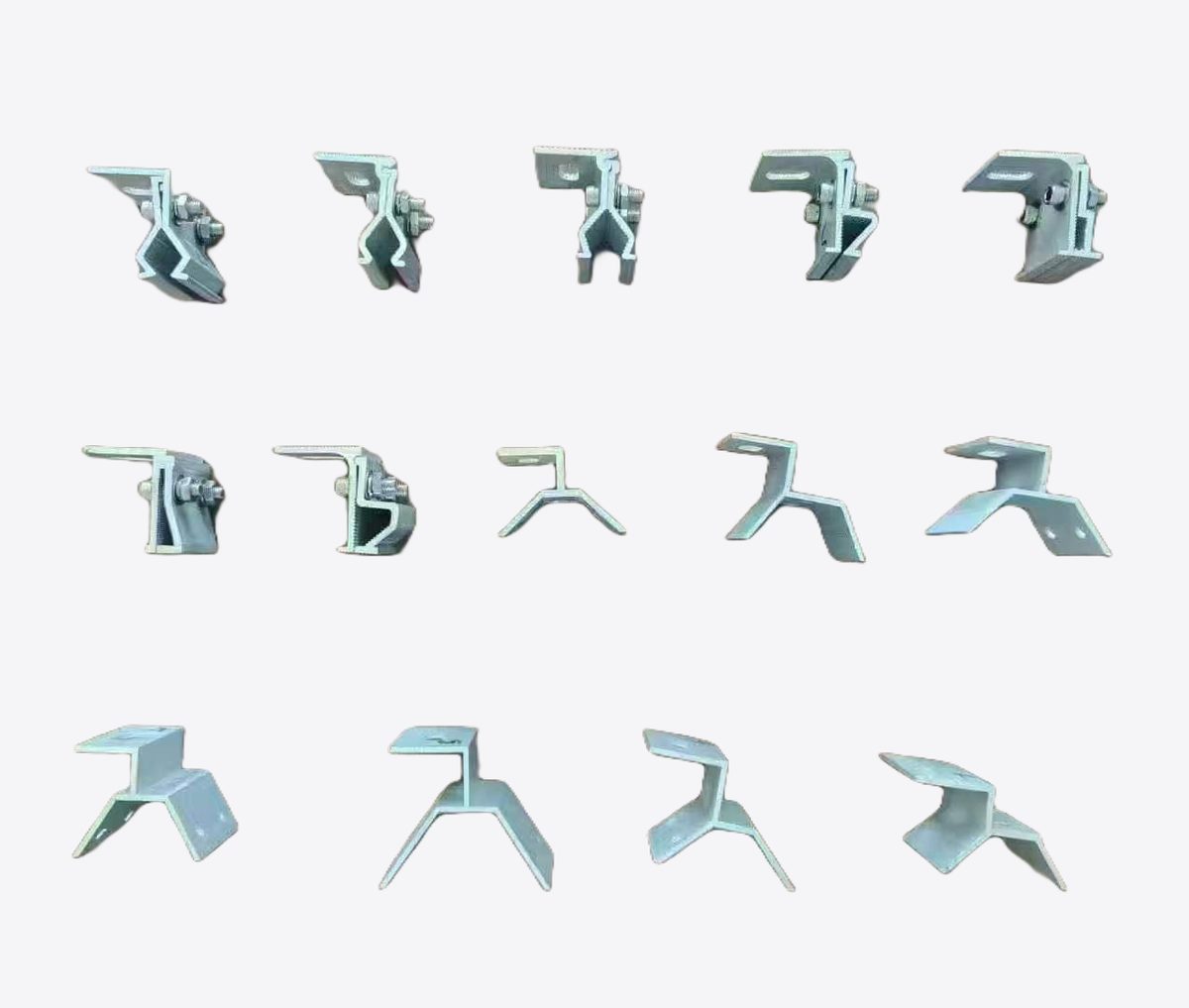
Mid clamps sit between two adjacent modules and grip both frames; end clamps grip only the outer frame on the row edge. Both transfer panel loads into the rail, but end clamps carry the edge-row wind uplift that can run up to twice the interior load. Clamp design (height, slot, bolt diameter) must match the module frame thickness and rail groove — a clamp that does not sit squarely on the frame will slip regardless of torque.
Typical torque values
| Clamp type | Bolt size | Typical torque range | Note |
|---|---|---|---|
| Mid clamp | M8 stainless | 8–12 N·m | Follow module and clamp manufacturer spec |
| End clamp | M8 stainless | 10–14 N·m | Edge rows carry higher uplift |
| Mid clamp (heavier frame) | M10 stainless | 12–16 N·m | Larger commercial modules |
| Rail splice bolt | M8/M10 | 18–25 N·m | Structural, not panel clamp |
| Grounding bond bolt | M6 stainless | 6–8 N·m | Verify continuity after tightening |
These are typical industry ranges, not universal values. The binding spec is always the module manufacturer’s installation manual: frame alloy, glass thickness and backrail design all change the allowed torque. Never rely on a gut feeling of "tight enough" — use a calibrated torque wrench on every clamp and record the reading.
Bolt grades and corrosion
Clamp fasteners on outdoor systems should be stainless steel SS304 at minimum, SS316 in coastal or high-chloride environments. Galvanized carbon bolts can be used on the main steel structure, but at the panel interface stainless avoids galvanic corrosion between the aluminum frame and the fastener. Check that the clamp bolt is grade A2-70 or A4-70 if the supplier provides a certificate — soft bolts stretch under load and lose preload over time.
What over-torquing actually breaks
- ▸Aluminum frame cracking: the frame is an extrusion with thin walls; over-torque deforms or cracks it, and the crack often stays hidden under the clamp.
- ▸Glass micro-cracks: frame stress transmits to the laminate, creating cell cracks that show up on thermal imaging as hot spots.
- ▸Bolt strip-out: soft threads strip and the clamp can no longer hold preload.
- ▸Stress on backrail: over-tightened clamps warp the backrail and gap the module from the rail.
What under-torquing causes
- ▸Clamp sliding along the rail under wind vibration, shifting modules out of alignment
- ▸Water ingress at the frame joint where the clamp fails to seal
- ▸Loose grounding: panel-to-rail bonding degrades as contact pressure drops
- ▸Wind noise and panel rattle in storms, leading to edge delamination
Installation best practices
- ▸Use a calibrated torque wrench, checked against a tester at the start of each shift
- ▸Clean the rail groove and frame edge before seating the clamp
- ▸Position the clamp so it sits flat on the frame, not tilted on the rail lip
- ▸Tighten in two passes: snug first, then torque to final value
- ▸Re-check a sample of clamps after the first 2–3 weeks — thermal cycling can loosen first assembly
- ▸Record clamp type, bolt grade and torque readings in the as-built package
Clamp selection checklist for buyers
- ▸Clamp height matches module frame thickness (common 30, 35, 40 mm)
- ▸Mid and end clamps listed separately in the BOM with quantities per row
- ▸Stainless grade stated (SS304 inland, SS316 coastal)
- ▸Torque specification provided on the installation drawing
- ▸Spare clamps and bolts included in the shipment for on-site damage
Sourcing clamps rated for 25 years
HAOQIN supplies mid and end clamps, rail bolts and grounding hardware in SS304/SS316 for HDG steel and aluminum mounting structures, matched to the module frame on your project. All structural steel components follow the 25-year design life with HDG 85 μm coating, 60 m/s wind and 1.5 kN/m² snow ratings. Send your module frame dimensions and quantities for a clamp specification and quotation.
Need a structure engineered for your site?
Send us your project details for load calculations, configuration and pricing.